
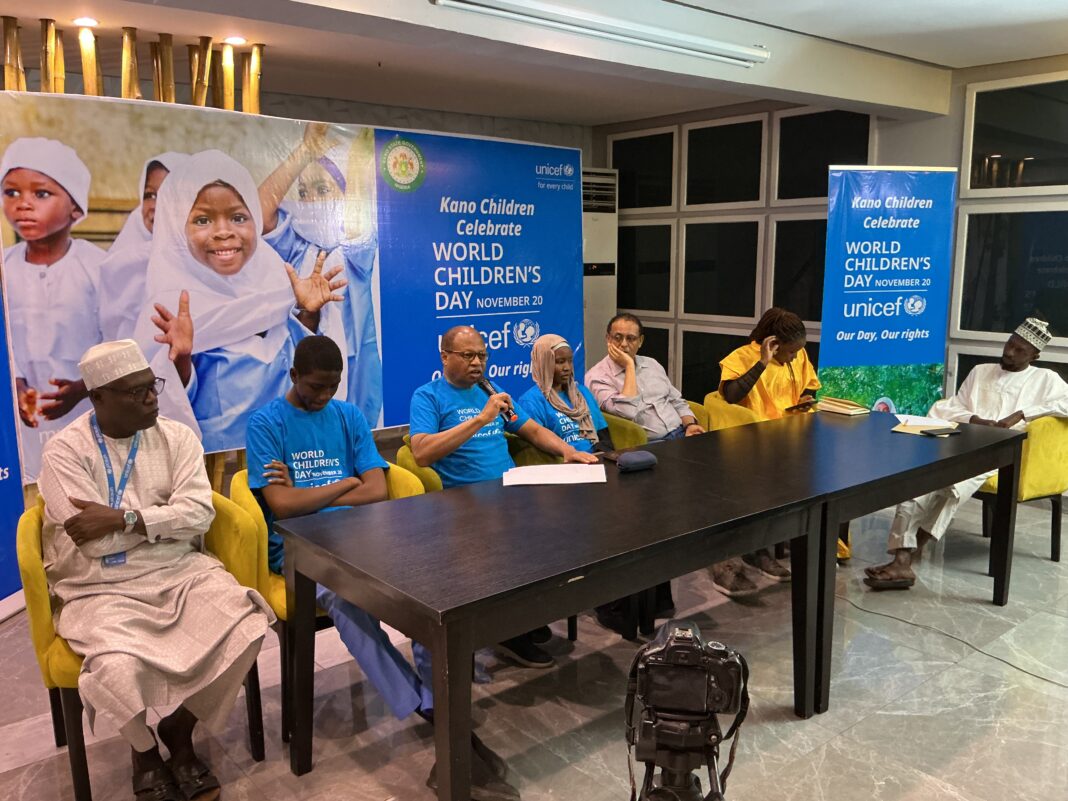

Kano State Radio Corporation, in collaboration with UNICEF on Wednesday commemorated the 2025 World Children’s Day themed ”our day, our right” with renewed calls to protect and improve the lives of children.The event, held in Kano, featured a Students’ Panel Discussion and a UNICEF press conference to unveil the “Nigerian Child 2025” report.
Speaking at the event, the Kano State Commissioner for Women Affairs, represented by the Assistant Director of Planning, Research and Statistics Mr. Zubair Abdulmumin Zubair, reaffirmed the ministry’s commitment to advancing the rights and welfare of every child in the state. He emphasized that children must be provided with a safe environment, quality education, proper nutrition and opportunities to thrive without discrimination.
Mr. Zubair commended UNICEF and the Kano State Radio Corporation for jointly creating a platform where children can freely express themselves and engage in discussions that affect their lives. He added that such collaborations strengthen advocacy and help shape policies that respond to the needs of vulnerable children.
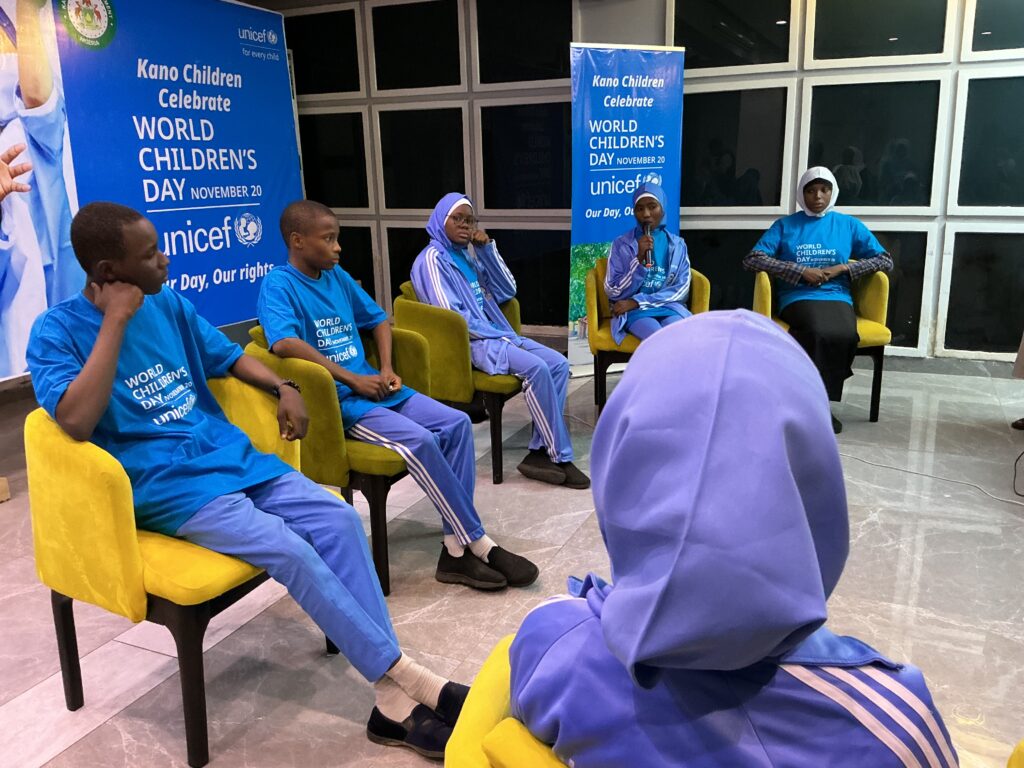
During the panel session, students from various schools spoke about the challenges children face in education, healthcare, clean water, sanitation, climate issues and child protection. They urged government and stakeholders to invest more in safe schools, functional health facilities, clean water services and programmes that protect children from violence, poverty and harmful practices.
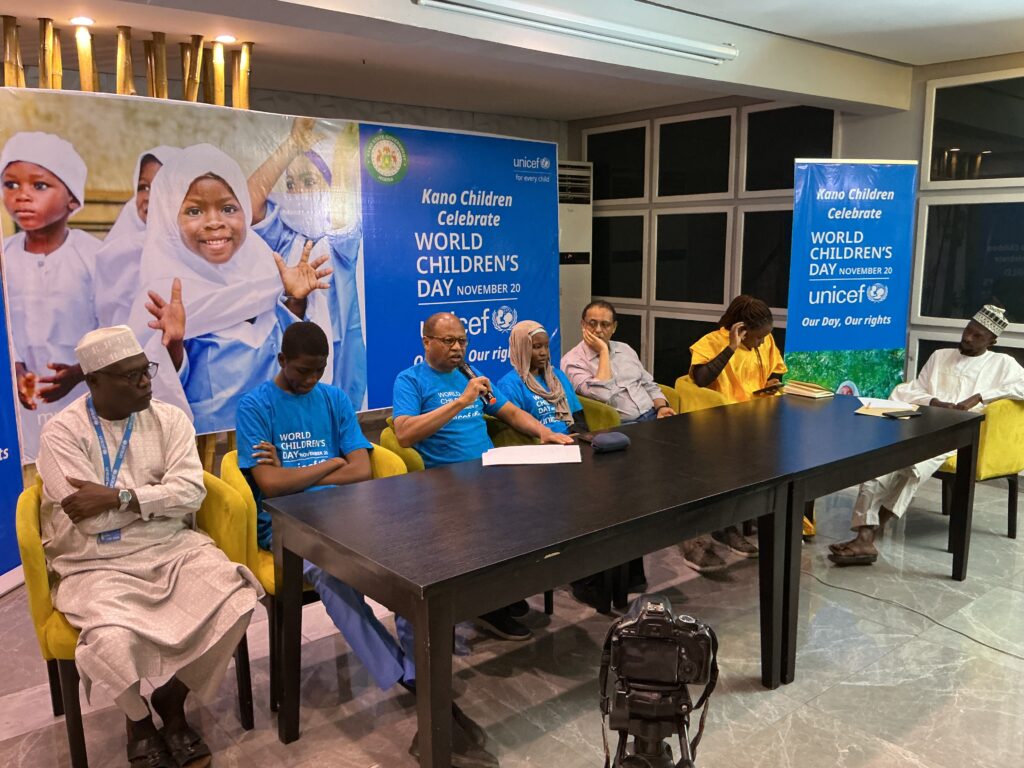
At the press conference, the Chief of UNICEF Field Office Kano, Rahama Rihood Mohammed Farah, presented the “Nigerian Child 2025” report. He said the report shows both progress and ongoing challenges affecting children in Nigeria, especially in Kano, Katsina and Jigawa. Farah explained that Nigeria has recorded improvements such as reduced child deaths, higher vaccination coverage and increased birth registration.
He added that more than 1.3 million people received health services in the first half of 2025 while 340,000 children were treated for severe acute malnutrition.He noted that children in the Northwest still face serious problems including high malnutrition, low vaccination in rural areas and millions of out of school children. According to the 2024 NDHS, stunting rates stand at 51.9 percent in Kano, 64.6 percent in Katsina and 55.7 percent in Jigawa.Farah highlighted UNICEF’s ongoing support to the three states.
In Kano, UNICEF is improving immunization by solarizing primary healthcare centres, supporting the renovation of PHCs and providing functional oxygen plants. In Jigawa, the Masaki Initiative has become a model for tackling child malnutrition. In Katsina, the government has invested over one billion naira for malnutrition treatment and all LGAs have committed one percent of their budgets to nutrition.
He added that water, sanitation and hygiene facilities have been upgraded in schools and health centres and that the Nigeria Learning Passport and integration of Quranic schools are expanding access to education.Farah called for continued collaboration among government, partners, civil society and communities to ensure children have access to healthcare, education, clean water, nutrition and protection. He reaffirmed UNICEF’s commitment to supporting Kano State to improve child wellbeing.


Feeling lucky? I’m trying my hand at 92 slot right now. Maybe today’s the day! Give it a try! 92 slot