
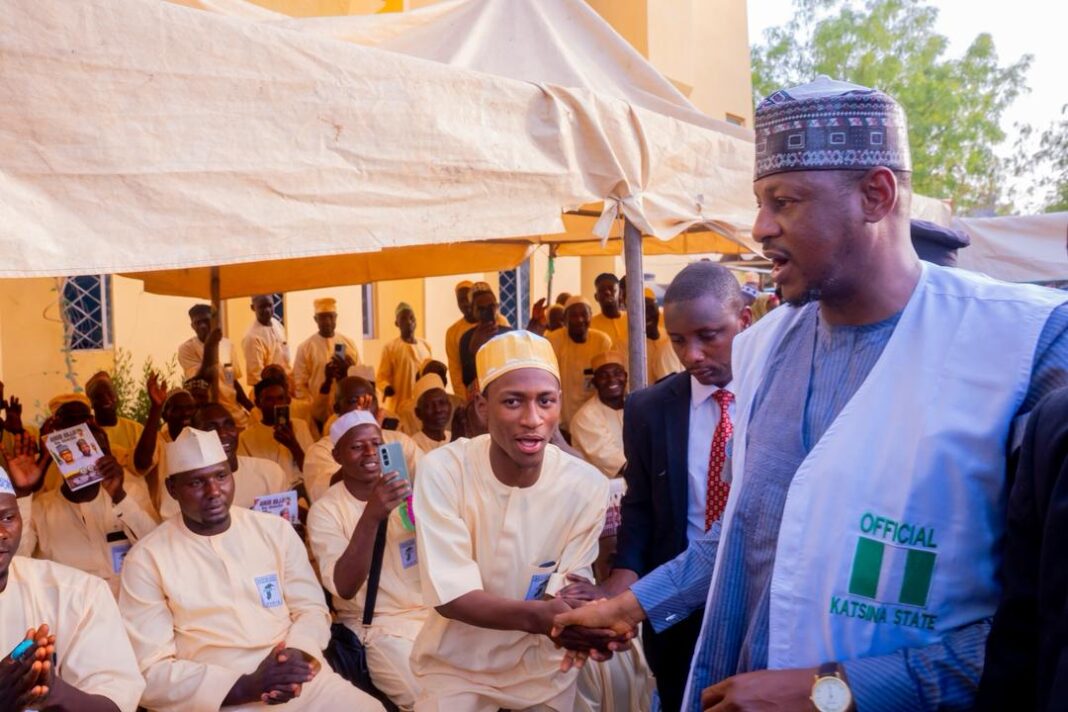

The 2026 Hajj exercise for pilgrims from Katsina State has emerged as one of the most remarkable displays of state backed welfare support in recent times, defined by a series of bold interventions from Governor Dikko Umaru Radda. At a time when many intending pilgrims were facing financial strain and uncertainty over securing their Hajj slots, the governor stepped in with a package of support measures that many have described as unprecedented in the state’s history of pilgrimage administration.
For Muslims, Hajj is not merely a journey but a lifelong spiritual ambition anchored on sacrifice, discipline and devotion. Across communities in Katsina State, some families spend years saving and preparing for this sacred obligation. Yet for the 2026 exercise, thousands of intending pilgrims found their aspirations threatened by financial challenges that affected the state’s ability to fully secure its allocated slots from the National Hajj Commission of Nigeria.
Without immediate intervention, many pilgrims risked missing the opportunity of a lifetime. It was against this backdrop that Governor Radda approved a ₦3.8 billion loan facility to enable Katsina State to secure and fully utilize all 3,890 Hajj slots allocated for the pilgrimage year. The decision ensured that no eligible pilgrim was left behind, preserving the hopes and spiritual aspirations of thousands of families across the state.
The intervention was widely seen as a decisive moment in public service delivery. Rather than allowing bureaucratic or financial constraints to disrupt the pilgrimage, the governor choose to prioritize citizens’ welfare and religious commitment. The funding arrangement not only stabilized the Hajj exercise but also reinforced confidence in the state’s administrative responsiveness.
Following the resolution of the slot allocation challenge, Governor Radda unveiled a comprehensive welfare package that immediately drew attention across the state. Central to the announcement was the provision of a $500 allowance for each intending pilgrim, disbursed before departure to the Kingdom of Saudi Arabia. This proactive payment ensured that pilgrims could prepare adequately for their journey without financial anxiety.
The decision to release the funds before departure was particularly significant. It allowed pilgrims to make necessary arrangements in advance and reduced the pressure associated with sourcing foreign currency at short notice. For many beneficiaries, the gesture represented not just financial assistance but a strong assurance of government care and preparedness.
In addition to the allowance, Governor Radda announced that the state government would fully shoulder the cost of Hadaya for all intending pilgrims. The Hadaya, an essential ritual sacrifice during Hajj, is a compulsory component of the pilgrimage that often places an additional financial burden on participants. By taking on this responsibility, the government removed yet another layer of financial stress.
The governor further deepened the welfare package by pledging to personally travel to Saudi Arabia during the pilgrimage period. He announced plans to meet Katsina pilgrims in the Holy Land and present them with Sallah packages, a gesture widely interpreted as a symbol of continuity of care beyond national borders. The promise reinforced his image as a leader committed to maintaining direct contact with citizens even in moments of spiritual engagement abroad.
The airlifting of pilgrims began on Monday, marking the start of the structured departure process. The first flight successfully departed Katsina State on Monday, followed by the second scheduled for Tuesday while the third and fourth flights, which conclude the airlift operations, are set for Wednesday. The organized schedule reflects careful coordination by the state authorities and relevant aviation and pilgrimage agencies.
The seamless commencement of flights has been credited to the efficient planning of the Katsina State Pilgrims Welfare Board in collaboration with national and international stakeholders. The structured airlift operation ensured that pilgrims departed in an orderly manner, minimizing delays and logistical complications.
Speaking during the farewell ceremony, Governor Radda urged the pilgrims to dedicate their prayers to peace, unity and security in Katsina State and across Nigeria. He reminded them that Hajj is one of the five pillars of Islam and a divine privilege granted only to those chosen by Almighty Allah. He encouraged them to uphold discipline, patience and dignity throughout their stay in the Holy Land.
He also emphasized that his administration had taken deliberate steps to improve accommodation, feeding and welfare arrangements for pilgrims in Saudi Arabia. According to him, 200 officials including clerics, medical personnel and welfare officers had been deployed to support the pilgrims throughout the exercise, ensuring both spiritual guidance and healthcare assistance.
The Amirul Hajj Barrister Ahmed Usman El-Marzuq, assured that all necessary consultations, sensitization exercises and logistical arrangements had been completed to guarantee a smooth and successful pilgrimage. He explained that responsibilities had been clearly assigned to officials to ensure accountability and efficiency at every stage.
He noted that Katsina pilgrims have consistently been recognized among the most disciplined and organized contingents in Nigeria and urged them to maintain that reputation.
Representatives of NAHCON also commended Katsina State for its strong coordination and preparedness. Through Commissioner Alhaji Umar Kalgo, pilgrims were advised to strictly comply with Saudi regulations particularly regarding the use of the Nusuk Card which grants access to major holy sites such as Makkah, Mina, Arafat and Muzdalifah.
One of the most emotional highlights of the event came when two intending pilgrims, Hajiya Sa’adatu Abdullahi and Alhaji Sanusi Muhammad, spoke on behalf of the entire Katsina contingent. They expressed deep appreciation to Governor Radda for what they described as unprecedented generosity and compassionate leadership that has transformed the experience of pilgrimage preparation.
They highlighted the ₦3.8 billion intervention that secured all Hajj slots, the $500 allowance paid in advance before departure, the government’s assumption of Hadaya costs and the promise of Sallah packages in Saudi Arabia. According to them, these interventions significantly reduced both financial and emotional burdens for thousands of families across the state.
The pilgrims stressed that no previous administration had implemented such a comprehensive welfare package for intending pilgrims. In their view Governor Radda’s actions reflect rare empathy, sincerity and a governance style rooted in humanity and service to the people.
In their closing remarks, Sa’adatu Abdullahi and Sanusi Muhammad offered heartfelt prayers for the governor, asking Almighty Allah to reward him abundantly, protect him and grant him continued success in serving humanity. They further prayed that, in recognition of his compassion and leadership, Allah would elevate him to higher responsibilities in governance including the opportunity to one day become President of the Nigeria.
The broader significance of the 2026 Hajj operation in Katsina State lies in the model of governance it represents. The combination of financial intervention, direct welfare support and administrative efficiency reflects a leadership philosophy anchored on responsiveness and empathy.
Governor Radda’s approach demonstrates that governance can extend beyond policy formulation into direct tangible impact on citizens’ lives. By addressing financial barriers, ensuring logistical readiness and supporting pilgrims personally and financially, his administration has redefined expectations around public welfare delivery.
The 2026 Hajj exercise in Katsina State will be remembered not only for the spiritual journey undertaken by 3,890 pilgrims but also for the leadership that made it more accessible, more dignified and less financially burdensome. Governor Dikko Umaru Radda’s ₦3.8 billion intervention, $500 allowance, Hadaya coverage, and promised Sallah packages collectively stand as a powerful statement of people centered governance, one that places humanity at the heart of public service.


wtetphlxpjyxnfjniqgrdsxqogehvt
rsnlyheizdghgtwioiwllythumhido