
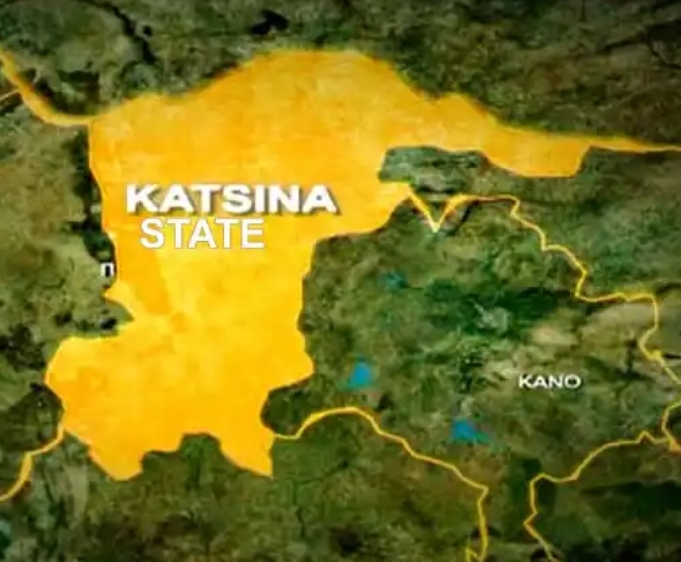

For years, insecurity defined daily life in large parts of Katsina State. It shaped conversations in homes and markets, influenced farming decisions, disrupted education and forced thousands of families to live in fear or displacement. The challenge was deep rooted and complex, driven by difficult geography, porous borders, vast forests and years of institutional weaknesses that allowed banditry to flourish.
When Governor Dikko Umar Radda assumed office, he did not inherit a clean state. He inherited a crisis that had already taken firm hold in several frontline local government areas, including Jibia, Batsari, Sabua, Faskari, Kankara, Dandume, Bakori, Danmusa and Safana.Yet, within a relatively short period, the narrative has begun to change.
Today, insecurity in Katsina State has reduced drastically, a development many residents and observers attribute to the proactive, deliberate and people focused leadership of Governor Radda. While challenges remain, the difference between the past and the present is increasingly visible.
Communities that once lived under constant threat are gradually regaining confidence, economic activities are picking up and hope is returning to areas that once symbolised fear. From the inception of his administration, Governor Radda made it clear that insecurity would not be treated as a peripheral issue. Instead, it would be addressed as a central obstacle to development and social stability.
This clarity of purpose shaped the administration’s early decisions and set the tone for a new approach. Unlike previous responses that were often reactive and fragmented, the Radda administration opted for a structured, institutional and sustained strategy.One of the most significant steps in this direction was the creation of the Katsina State Ministry of Internal Security and Home Affairs.
The establishment of the ministry marked a turning point in the state’s security architecture. It signalled political will, prioritised internal security at the highest level of governance and provided a dedicated platform for policy formulation, coordination and implementation. With Nasiru Mu’azu Danmusa appointed as Commissioner, the ministry was positioned to drive a focused response to the state’s unique security challenges.
Complementing this institutional framework was the appointment of Yusuf Ibrahim Safana as Special Adviser on Security. His role strengthened the link between government policy and on the ground realities, ensuring that security strategies were informed by local intelligence and community engagement. Beyond advisory duties, he also serves as the Chairman of the Committee on Victims of Banditry, a responsibility that underscores the administration’s recognition of the human cost of insecurity.
For years, victims of banditry in Katsina State suffered in silence. Entire communities were traumatised by attacks, abductions and destruction of livelihoods, yet structured support was largely absent. Governor Radda’s administration took a different path. By establishing the Committee on Victims of Banditry, the government institutionalised compassion as part of its security response.
The committee, made up of experienced and dedicated officials including Abubakar Hamish, Sa’idu Ibrahim Danja, Lawal Zubair, Shafi’u Ibrahim Safana and Dikko Ibrahim Kukasheka as Secretary, was mandated to engage victims directly, assess their needs and recommend appropriate interventions.This approach reflects a deeper understanding that security is not achieved solely through the presence of armed personnel or tactical operations.
Sustainable peace also depends on healing communities, restoring trust and addressing the socio-economic consequences of violence. By acknowledging victims and providing tangible support, the Radda administration has helped to break a long standing cycle of neglect and resentment. A practical demonstration of this policy was seen during the committee’s visit to Sabua Local Government Area, one of the communities heavily affected by banditry.
Acting on the directive of Governor Radda, the committee visited the area to condole with victims and their families, conveying the governor’s message of solidarity and reassurance. The visit was not symbolic alone. It was backed by the disbursement of ₦65 million as financial support to victims of banditry in the local government.
For beneficiaries, the intervention represented more than financial relief. It was a powerful statement that the state government recognised their suffering and was committed to supporting their recovery. In areas where trust in government had been weakened by years of insecurity, such direct engagement has played a crucial role in rebuilding confidence and strengthening the social contract between the state and its citizens.
Governor Radda’s proactiveness has also been evident in the way security operations are coordinated. Recognising the complexity of Katsina’s terrain, the administration has prioritised collaboration with federal security agencies, traditional leaders and local communities. The forests, hills and border areas that once served as safe havens for criminals now demand coordinated intelligence gathering and swift response mechanisms.
By encouraging information sharing and community participation, the government has improved early warning systems and enhanced the effectiveness of security interventions.The impact of these efforts is increasingly visible across the state. In many frontline local government areas, residents report a significant reduction in attacks and improved freedom of movement. Farmers are returning to their fields, markets are regaining activity and schools are functioning with greater consistency.
While these gains may appear modest in isolation, they represent meaningful progress in communities that once lived under constant threat.Importantly, the reduction in insecurity has had positive ripple effects on the state’s economy. Agriculture, which remains the backbone of Katsina State, has benefited from improved security conditions. With reduced fear of attacks, farmers are cultivating larger portions of their land, contributing to food security and household income.
Small scale traders and artisans are also experiencing renewed patronage as communities stabilise and economic life resumes.Governor Radda’s leadership style has played a critical role in sustaining this momentum. His approach combines firmness with empathy, ensuring that security measures are balanced with social interventions. Rather than relying solely on force, the administration has invested in victim support and community engagement.
This balance has helped to prevent alienation and foster a sense of shared responsibility for peace.Consistency is another defining feature of the administration’s security strategy. Insecurity is not a problem that disappears overnight and the government has avoided the temptation of quick fixes. Instead, it has maintained steady focus, continually strengthening institutions, supporting victims and refining operational strategies.
This consistency has gradually reshaped public perception, replacing scepticism with cautious trust.The creation of the Ministry of Internal Security and Home Affairs has also enhanced accountability. With a dedicated institution responsible for internal security, policies are better monitored, responses are more coordinated and progress can be more effectively evaluated. This institutional clarity contrasts sharply with past approaches where responsibilities were often diffused and outcomes difficult to measure.
As insecurity reduces, attention is also shifting towards long term peacebuilding and development. Governor Radda’s administration understands that security gains must be consolidated through inclusive development, job creation and social services. Communities that feel economically empowered and socially included are less vulnerable to criminal influence. By aligning security efforts with broader development goals, the government is working to address both the symptoms and root causes of insecurity.
Challenges, however, have not completely disappeared. Katsina’s geographical realities, including expansive forests and border proximity, continue to pose risks. Regional security dynamics and economic pressures also intersect with local challenges.Yet, the difference today lies in preparedness and leadership. The state now has clearer structures, stronger coordination and a leadership that has demonstrated commitment and responsiveness.Governor Radda’s proactiveness has restored a sense of direction. The reduction in insecurity is not seen as accidental but as the outcome of deliberate policy choices and sustained effort.
By confronting inherited challenges head on, prioritising institutional reform and placing citizens at the centre of the security response, the administration has begun to rewrite Katsina State’s security story.Ultimately, the evolving situation in Katsina State offers an important lesson in governance. Security is not merely about combating crime, it is about protecting lives, restoring dignity and creating conditions for development. Governor Dikko Umar Radda’s approach, marked by foresight, empathy and resolve, has significantly reduced insecurity and rekindled hope across the state. While the journey towards lasting peace continues, the progress recorded so far affirms that Katsina State is firmly on the path towards stability, resilience and a more secure future for its people.

