
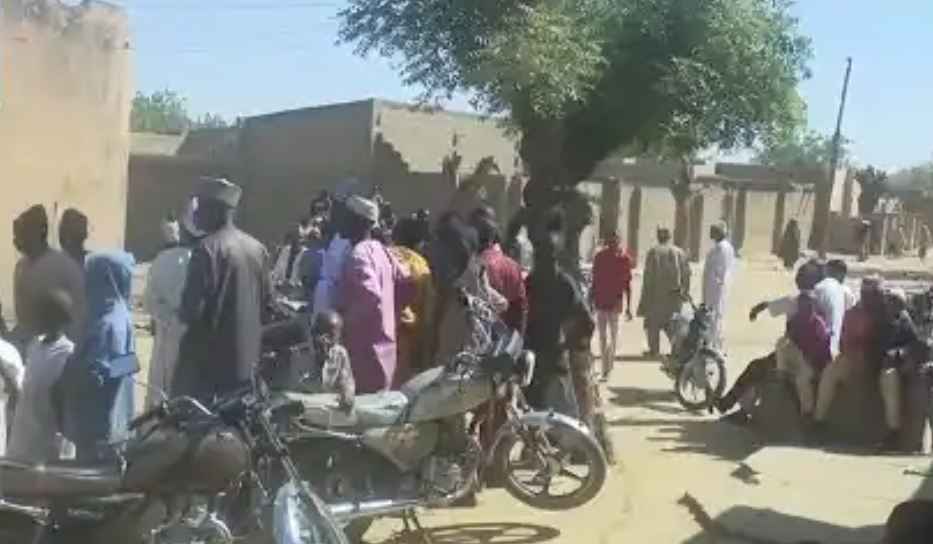

Grief hung heavily over parts of Katsina State as communities in Jibia Local Government Area struggled to come to terms with a painful incident that shattered a period of hard earned calm. In the villages of Falale and Kadobe lives were lost, families were broken and a familiar sense of fear returned. Yet, even in the face of sorrow, a deeper story is unfolding. One of resilience, collective responsibility and a government determined not to allow tragedy define its progress.
The March 17, 2026 incident which claimed 15 lives, was both shocking and heartbreaking particularly because it disrupted over a year of relative peace in Jibia. This calm had not come easily. It was the result of deliberate, sustained efforts by the administration of Governor Dikko Umaru Radda whose security strategies had begun to restore confidence in communities long troubled by banditry and violence.
According to available accounts, the incident was triggered by an encounter between local vigilantes and a group of repentant bandits. The initial clash led to casualties among the vigilantes, sparking a reprisal that quickly escalated into a wider confrontation affecting the surrounding villages. What followed was a tragic chain of events that left families mourning and communities shaken.
In moments like this, the pain is not abstract, it is real and deeply personal. It is seen in the tears of mothers, the silence of fathers and the unanswered questions of children who have lost loved ones. The government in acknowledging this pain, has not treated the incident as just another security report but as a human tragedy that demands empathy, action and accountability.
A resident of Falale village Malam Ibrahim Musa, spoke with a heavy heart, saying the community is still struggling to recover from the shock. “We had started to sleep with our eyes closed again after a long time. This incident has brought back painful memories but we still believe the government is doing its best. What we want now is more protection and for this kind of tragedy not to happen again” he said.
In Kadobe, a mother of three A’ee Sha’ibu cried for help and expressed both grief and cautious hope. “We lost people and the pain is something we cannot forget easily. But we have seen improvements in security before this happened. We are appealing to the government and security agencies to strengthen their presence here so that peace can fully return to our community on” she said.
Even as the incident unfolded, security agencies moved swiftly to contain the situation. Personnel of the Nigeria Police Force, the Department of State Services, Civilian Watch Corps and community leaders worked side by side to restore order. Their coordinated response prevented further escalation, demonstrating that the structures put in place by the state government are not only functional but effective in times of crisis.
This synergy is not accidental. It is part of a broader security architecture carefully developed under the leadership of Governor Dikko Umar Radda with strong coordination from the Ministry of Internal Security and Home Affairs led by Dr Nasiru Mu’azu Danmusa. Through this office, intelligence sharing has been strengthened, inter agency collaboration has improved and community engagement has become a central pillar of security management.
The government’s approach has been both kinetic and non kinetic reflecting an understanding that force alone cannot solve complex security challenges. While security forces remain vigilant and ready to respond decisively to threats, equal emphasis has been placed on dialogue, reconciliation and the reintegration of those willing to abandon violence. This balanced strategy has contributed significantly to the relative peace experienced in Jibia prior to the recent incident.
The concept of reintegrating repentant bandits though delicate, is rooted in the desire to break cycles of violence. It seeks to replace confrontation with engagement and hostility with understanding. While the events in Falale and Kadobe highlight the risks involved, they do not diminish the broader gains achieved through this approach. Instead, they call for greater caution, deeper community involvement and continuous refinement of the process.
Governor Radda’s response to the tragedy has been marked by empathy and reassurance. Speaking during the Eid-el-Fitr celebrations, he acknowledged the pain of affected families and assured them that the government stands with them in their time of grief. His words were not merely ceremonial, they reflected a genuine commitment to ensuring that such incidents are addressed with urgency and sincerity.
He reminded citizens that Eid is a time of unity, compassion and generosity values that are even more important in moments of crisis. By urging residents to hold on to these principles beyond the festive period, the governor emphasized the role of collective morality in sustaining peace. His message was clear, security is not only the responsibility of government but a shared duty that requires the participation of every citizen.
Beyond words, the administration has continued to demonstrate its resolve through action. Investigations into the incident are ongoing with assurances that those responsible will be brought to justice. At the same time efforts are being intensified to strengthen security presence in vulnerable areas and prevent any recurrence of violence.
It is important to recognize that the calm previously enjoyed in Jibia was not coincidental. It was the result of strategic planning, consistent engagement and unwavering commitment by the state government. That a single incident disrupted this peace does not erase the progress made. Rather, it underscores the need to sustain and build upon it.
The resilience of the people of Katsina State remains one of its greatest strengths. Despite repeated challenges, communities have continued to cooperate with security agencies, provide vital information and support initiatives aimed at restoring stability. This spirit of collaboration has been a cornerstone of the state’s security efforts and will remain essential in the journey ahead.
The government has consistently called on residents to report suspicious activities and avoid actions that could escalate tensions. In the aftermath of the Jibia incident, this call has become even more urgent. Preventing future tragedies will depend not only on the actions of security forces but also on the vigilance and cooperation of the public.
While the pain of loss cannot be undone, there is a collective determination to ensure that such sacrifices are not in vain. Each step taken to strengthen security, each effort to promote unity and each action aimed at addressing root causes brings the state closer to lasting peace.
Governor Radda’s administration has made it clear that it will not be distracted or discouraged by setbacks. The commitment to protecting lives and property remains firm, guided by a vision of a Katsina State where security is not a privilege but a guarantee for all.
For the grieving families in Falale and Kadobe, the road ahead will be difficult. Healing will take time and the void left by lost loved ones cannot be easily filled Yet, in the midst of sorrow, there is hope, hope that justice will be served, that peace will return and that the efforts being made today will secure a safer tomorrow.
The events in Jibia serve as a sobering reminder that the path to peace is rarely linear. It is marked by progress and setbacks, victories and challenges. But with sustained commitment, strong leadership and collective resolve, it is a path that leads forward.

